
SEO vs Google Ads: Which One Is Better for Your Business?
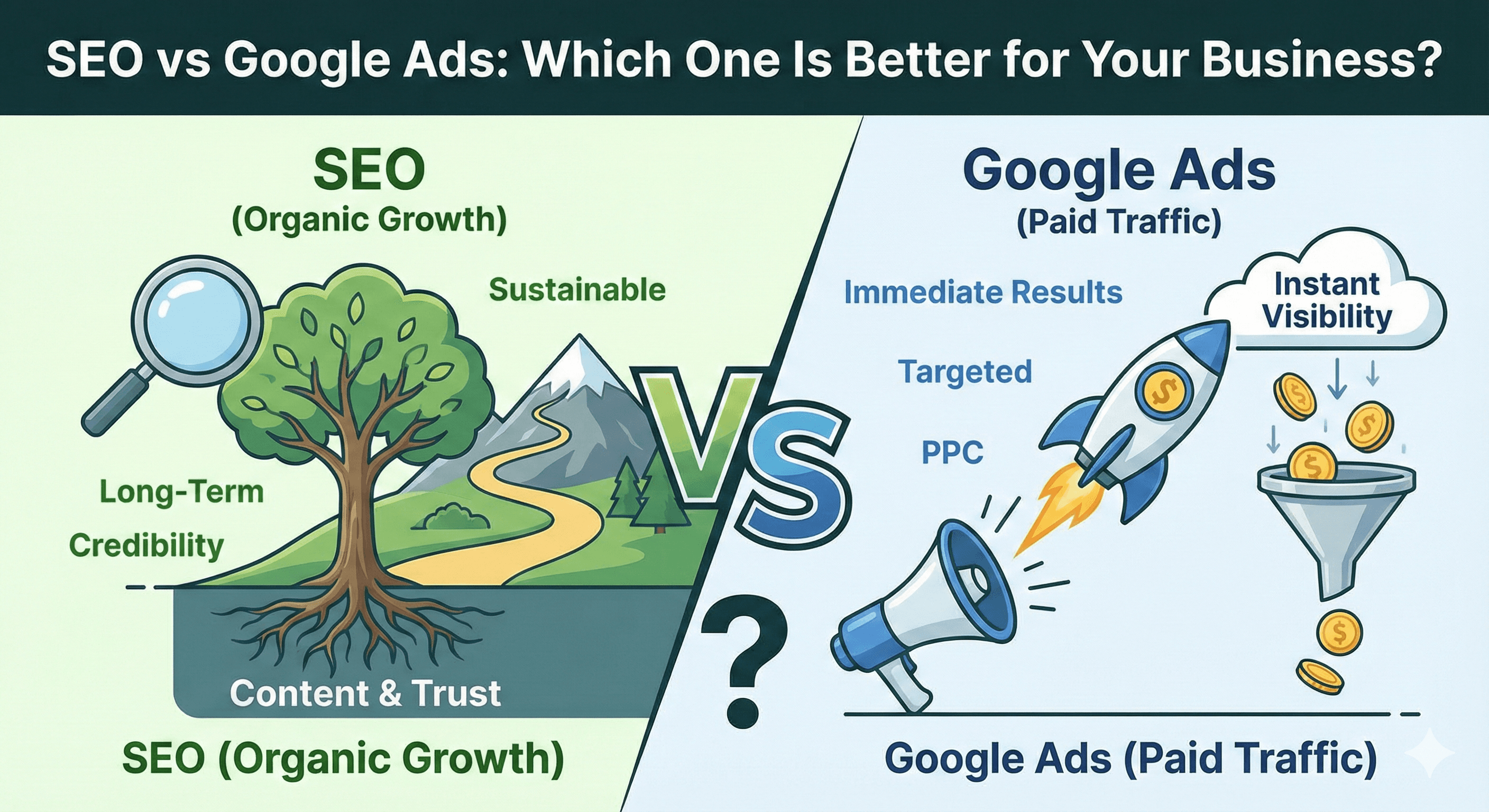
In today's competitive digital landscape, every business faces a critical question: Should you invest in SEO, Google Ads, or both? With marketing budgets tighter than ever and consumer behavior constantly evolving, making the right choice can mean the difference between explosive growth and wasted resources.
At DevPoint, we've helped dozens of businesses navigate this exact decision. After managing campaigns across both channels for clients in India and globally, we've seen firsthand what works, what doesn't, and when each strategy delivers maximum ROI.
This comprehensive guide breaks down SEO vs Google Ads in 2025—with real data, practical examples, and actionable insights to help you make the smartest investment for your business goals.
Understanding SEO: The Long-Term Growth Engine
Search Engine Optimization (SEO) is the practice of improving your website to rank higher in organic (unpaid) search results. When someone searches for "web development services in India" or "best digital marketing agency," SEO determines whether your website appears on page one or gets lost on page ten.
How SEO Works
SEO involves multiple interconnected strategies:
Keyword Research: Identifying the exact terms your target customers search for. This isn't guesswork—it's data-driven analysis of search volume, competition, and user intent.
On-Page Optimization: Optimizing your website's content, meta titles, descriptions, headers, and internal linking structure to make it easier for search engines to understand and rank your pages.
Technical SEO: Ensuring your website loads quickly, works flawlessly on mobile devices, has clean code, and provides excellent user experience. In 2025, Core Web Vitals—Google's metrics for page experience—directly impact rankings.
Content Creation: Publishing high-quality, valuable content that answers user questions, solves problems, and establishes your brand as an authority in your industry.
Link Building: Earning backlinks from reputable websites, which signals to Google that your content is trustworthy and valuable.
The Real Benefits of SEO
Long-Term Cost Efficiency: Once you rank, organic traffic flows to your site without paying for each click. A well-ranked article can generate thousands of visitors monthly for years without additional investment.
Higher Trust and Credibility: Studies show that 49% of marketers say organic search delivers the best ROI among all marketing channels. Users trust organic results more than paid advertisements.
Compounding Returns: SEO builds digital equity. The work you do today continues paying dividends for months and years. Your rankings, authority, and traffic compound over time like a growing investment.
Better Conversion Rates: Organic traffic often converts better than paid traffic. In financial services, for example, SEO converts at 7.3 times the rate of PPC advertising. Users searching organically typically have higher intent and trust.
Understanding Google Ads: The Immediate Visibility Solution
Google Ads is a pay-per-click (PPC) advertising platform where businesses bid on keywords to display ads at the top of search results. You pay only when someone clicks your ad, making it a performance-based channel.
How Google Ads Works
When someone searches for your target keyword, Google runs an instant auction. Your ad's placement depends on:
Bid Amount: How much you're willing to pay per click
Quality Score: Google's rating of your ad's relevance and landing page quality
Ad Rank: A combination of bid and quality score determines placement
In 2025, Google Ads leverages AI extensively. Smart Bidding automatically adjusts bids based on device, location, time of day, and user behavior. Performance Max campaigns stretch across Search, Display, YouTube, Gmail, and Shopping from a single dashboard.
The Real Benefits of Google Ads
Immediate Results: Launch a campaign in the morning, see traffic and leads by afternoon. This immediacy is invaluable for product launches, seasonal promotions, or businesses needing quick cash flow.
Precise Targeting: Show ads to specific demographics, locations, devices, and even times of day. Target "web development services in Ghaziabad" to reach exactly your local audience.
Complete Budget Control: Set daily budgets, pause campaigns instantly, and scale spending based on results. You're never locked into long-term commitments.
Valuable Data Insights: Google Ads reveals which keywords actually convert, providing insights you can use to improve SEO strategy. Test market response before investing in long-term content.
Multi-Platform Reach: Your ads appear across Google Search, YouTube, Gmail, Google Shopping, and millions of partner websites through the Display Network.
SEO vs Google Ads: Head-to-Head Comparison
Speed and Timeline
Google Ads: Immediate visibility. Launch campaigns today, drive traffic within hours. Perfect for time-sensitive promotions or when you need quick market validation.
SEO: Long-term play. Expect 4-6 months for meaningful results, 9-18 months to reach full potential. Like planting a tree—slow growth, but eventually becomes a strong, lasting asset.
Cost Structure and ROI
Google Ads:
- Cost per click varies widely (₹40-₹2,000+ depending on industry and competition)
- Typical monthly budgets: ₹25,000-₹2,00,000+ for small to medium businesses
- ROI is immediate but stops when spending stops
- Average conversion rate: 7.52% across industries (2025 data)
SEO:
- Initial investment in content, tools, and optimization: ₹30,000-₹1,50,000+ setup
- Ongoing costs primarily in content creation and maintenance
- Average ROI of 748% over time
- Cost per lead can be 61% less than paid advertising in the long term
- Leads generated through SEO cost significantly less once rankings are established
Trust and Credibility
Google Ads: Users know they're paid placements. While effective, ads can feel transactional. Some users skip them entirely.
SEO: Organic rankings build authority and trust. Appearing on page one organically signals to users that Google considers your content valuable and trustworthy. This inherent credibility often leads to higher conversion rates.
Control and Predictability
Google Ads: Complete control over targeting, messaging, budget, and timing. Pause campaigns instantly. Adjust bids in real-time. Predictable costs (though ROI varies).
SEO: Limited control over how Google displays your content or for which exact searches. Algorithm updates can impact rankings. Less predictable timeline and results, though impact compounds over time.
Scalability
Google Ads: Easy to scale—simply increase budget. However, costs scale linearly. Doubling budget roughly doubles results (assuming conversion rates stay consistent).
SEO: Harder to scale quickly (requires more content, more links, more technical work), but results compound. A single well-ranked page can generate traffic for years without additional spending.
When to Choose SEO
SEO makes the most sense when:
You Have Time to Build: If your business can wait 6-12 months for significant results and you're thinking long-term, SEO delivers exceptional ROI over time.
You Want Sustainable Traffic: Once ranked, organic traffic continues flowing without ongoing per-click costs. This sustainability is crucial for businesses building for the future.
Your Budget is Limited: After initial investment, SEO becomes increasingly cost-effective. You're not paying ₹100+ per click indefinitely.
You're Targeting Broad Topics: SEO excels at capturing traffic for informational and educational content—blog posts, guides, tutorials—that attract users earlier in the buying journey.
Trust and Authority Matter: For B2B services, professional services, or industries where credibility is crucial, organic rankings signal expertise and trustworthiness more effectively than ads.
When to Choose Google Ads
Google Ads makes the most sense when:
You Need Immediate Results: Launching a new product? Running a seasonal promotion? Need leads this week? Google Ads delivers instant visibility.
You're Testing Market Response: Before investing months in SEO for a keyword, run Google Ads to see if it actually converts. Use paid data to validate SEO investments.
You Have Healthy Margins: If your average customer value is ₹50,000 and cost per lead through ads is ₹2,000, that's profitable. Ads work when unit economics support the CPC.
Competition is Intense: In crowded markets where SEO would take years, ads provide a shortcut to visibility while building organic presence.
You're Targeting High-Intent Keywords: Keywords like "emergency plumber Mumbai" or "buy iPhone 16 online" indicate users ready to act now. Ads capture this immediate demand perfectly.
The Winning Strategy: Using Both Together
Here's the truth most agencies won't tell you: SEO vs Google Ads is the wrong question. The right question is: How can SEO and Google Ads work together?
When combined strategically, these channels create synergy that dramatically outperforms either in isolation.
Why the Hybrid Approach Wins
Dominate Search Results: When your brand appears in both paid and organic results, you instantly boost visibility and credibility. According to AgencyAnalytics, owning both the top ad spot and top organic position can capture up to 49% of all clicks on the page.
Use Ads to Fuel Smarter SEO: Google Ads reveals which keywords actually convert. Instead of guessing what content to create, let paid data show you proven winners. If "affordable web design Ghaziabad" drives quality leads through ads, build SEO content around it.
Lower Ad Costs with SEO: When you rank organically for certain keywords, reduce or pause ad spending on those terms. Reallocate budget to keywords where you don't yet rank. This optimization reduces overall customer acquisition costs.
Fill Coverage Gaps: Use SEO for evergreen topics and industry terms while running ads for time-sensitive campaigns, new offerings, or ultra-competitive keywords where organic ranking takes too long.
Retargeting Opportunities: Visitors who find you through organic search can be retargeted with ads later, bringing them back when they're ready to convert. This multi-touch approach increases conversion rates significantly.
Real-World Hybrid Strategy Examples
Startup SaaS Company:
- Months 1-3: 80% budget on Google Ads targeting high-intent keywords ("project management software for startups"). Generate immediate customers and cash flow.
- Months 4-12: Shift to 50/50 split. Use conversion data from ads to guide SEO content creation. Build authority through blog posts, case studies, and guides.
- Year 2+: Reduce ads to 30% of budget as organic rankings take hold. Maintain ads only for new features and seasonal campaigns.
Local Service Business (Plumbing, Electrical, etc.):
- SEO: Target informational content ("how to fix leaky faucet," "signs you need electrical rewiring"). Build authority and capture early-stage research traffic.
- Google Ads: Bid on emergency and high-intent keywords ("emergency plumber near me," "24-hour electrician Ghaziabad"). Capture customers ready to book immediately.
- Result: SEO builds brand awareness and trust; ads convert ready-to-buy customers instantly.
E-Commerce Store:
- SEO: Optimize category pages, product pages, and create buying guides ("best running shoes for flat feet").
- Google Shopping Ads: Run product-level campaigns for bestsellers and new arrivals.
- Result: Organic traffic converts existing customers; ads acquire new customers and push inventory.
Common Mistakes to Avoid
SEO Mistakes That Waste Time and Money
Targeting Wrong Keywords: Optimizing for high-volume keywords without considering intent or competition often leads to months of wasted effort. Focus on keywords you can realistically rank for.
Neglecting Technical SEO: Beautiful content means nothing if your site loads slowly, has broken links, or doesn't work on mobile. Technical foundation comes first.
Inconsistent Effort: SEO requires ongoing content creation and optimization. Publishing five articles then stopping for six months won't deliver results.
Ignoring User Intent: Ranking for keywords is useless if the content doesn't match what users actually want. A keyword with 10,000 monthly searches but wrong intent converts poorly.
Google Ads Mistakes That Burn Budget
Poor Landing Page Experience: Driving clicks to a slow, confusing, or irrelevant landing page wastes every rupee spent. Ads and landing pages must align perfectly.
Not Using Negative Keywords: Without negative keywords, your ads show for irrelevant searches, burning budget on unqualified clicks.
Set-and-Forget Mentality: Google Ads requires ongoing monitoring and optimization. Campaigns left unmanaged for weeks waste significant budget.
Ignoring Quality Score: Low Quality Scores mean higher costs per click. Focus on ad relevance, landing page quality, and expected click-through rate to improve scores and reduce costs.
Making Your Decision: A Practical Framework
Still unsure which strategy fits your business? Use this framework:
Choose SEO as Primary Strategy If:
✅ You have 6-12 months to see meaningful results
✅ Your monthly marketing budget is under ₹50,000
✅ You're targeting educational or informational content
✅ Your industry has reasonable organic competition
✅ You want to build long-term brand authority
✅ Your business model supports waiting for compounding returns
Choose Google Ads as Primary Strategy If:
✅ You need leads or sales within days or weeks
✅ You have healthy profit margins supporting ad costs
✅ You're launching new products or time-sensitive campaigns
✅ Your target keywords indicate immediate buying intent
✅ You have budget for ₹25,000+ monthly ad spend
✅ You can dedicate time to campaign management and optimization
Choose Hybrid Approach (Recommended) If:
✅ You have moderate budget (₹50,000+ monthly)
✅ You want both immediate results and long-term growth
✅ You're serious about dominating your market
✅ You can allocate resources to both strategies
✅ You want to use data from one channel to improve the other
How DevPoint Can Help
At DevPoint, we don't believe in one-size-fits-all solutions. We analyze your business, goals, budget, and competition to craft strategies that deliver measurable ROI.
Our SEO Services Include:
- Comprehensive keyword research targeting terms your customers actually search
- Technical SEO audits and optimization for speed, mobile experience, and Core Web Vitals
- Strategic content creation that ranks and converts
- Link building from reputable, relevant websites
- Ongoing monitoring, reporting, and optimization
- Local SEO for businesses targeting geographic areas
Our Google Ads Services Include:
- Campaign strategy and structure aligned with your business goals
- Keyword research and competitive analysis
- Ad copy creation and testing
- Landing page optimization for maximum conversions
- Bid management and budget optimization
- Conversion tracking and detailed performance reporting
- Ongoing campaign monitoring and improvement
Hybrid Strategies We Implement:
We specialize in integrated approaches that leverage both channels synergistically:
- Use Google Ads data to identify high-converting keywords for SEO content
- Build organic rankings to reduce dependence on paid advertising over time
- Maintain ad presence for competitive terms while SEO builds momentum
- Create comprehensive market coverage capturing traffic at all stages
Conclusion: It's Not About Better—It's About Smarter
SEO vs Google Ads isn't about which is "better." It's about which—or more likely, what combination—fits your unique business situation.
Google Ads delivers immediate visibility, precise targeting, and quick results. It's perfect for businesses needing fast leads, testing markets, or promoting time-sensitive offers. However, costs are ongoing, and visibility disappears when spending stops.
SEO builds sustainable organic presence, earns trust and authority, and delivers compounding returns over time. It requires patience and consistent effort but becomes increasingly cost-effective as rankings improve. Once established, organic traffic flows without per-click costs.
The smartest businesses in 2025 don't choose one or the other—they strategically combine both. Use Google Ads for immediate results and market validation while building SEO for long-term sustainable growth. Let paid data inform organic strategy. Dominate search results with both paid and organic presence.
Your next step? Evaluate your goals, budget, and timeline. Then craft a strategy that leverages the unique strengths of each channel.
Ready to dominate search results and grow your business? **Contact DevPoint today** for a free consultation. We'll analyze your current situation, identify opportunities, and create a custom strategy delivering measurable ROI.
SEO vs Google Ads: Which One Is Better for Your Business? Visit www.devpoint.in or email us to schedule your free digital marketing assessment.
Frequently Asked Questions
Is SEO or Google Ads better for small businesses?
It depends on your timeline and budget. If you need customers immediately and have budget for ads (₹25,000+ monthly), start with Google Ads. If you can wait 6-12 months and have limited budget, invest in SEO. Ideally, small businesses benefit from starting with a small ad budget for immediate leads while simultaneously building SEO for long-term growth.
How long does SEO take to show results?
Most businesses see noticeable improvements in 4-6 months, with significant impact typically occurring between 9-12 months. However, timeline varies based on competition, content quality, existing domain authority, and consistency of effort. Some less competitive keywords may rank faster; highly competitive terms can take 12-18 months or longer.
How much should I budget for Google Ads?
Minimum effective budget varies by industry and competition but generally starts around ₹25,000-₹50,000 monthly for small businesses. Competitive industries (legal, medical, insurance) may require ₹1,00,000+ monthly to see meaningful results. Start with a test budget, measure ROI, then scale spending on what works.
Can I do SEO myself or should I hire an agency?
Basic SEO (keyword research, basic optimization) can be learned and implemented yourself. However, effective SEO in 2025 requires technical expertise, content creation skills, link building relationships, and significant time investment. Most businesses find that hiring experts delivers better ROI than DIY efforts, especially when you factor in opportunity cost of your time.
What's better for local businesses: SEO or Google Ads?
Local businesses often benefit from both. Google Ads with location targeting delivers immediate local visibility for high-intent searches ("plumber near me"). Local SEO builds authority in your geographic area through Google Business Profile optimization, local citations, and location-specific content. Combined, they ensure you appear for both immediate-need searches and broader research queries.
How do I measure ROI for SEO vs Google Ads?
Google Ads ROI: Track conversions, cost per lead, customer acquisition cost, and lifetime value. Google Ads provides detailed conversion tracking showing exactly what you spent and what you earned.
SEO ROI: Track organic traffic growth, keyword rankings, organic conversions, and revenue attributed to organic channels. ROI calculation includes initial investment plus ongoing costs divided by total revenue generated. SEO ROI typically improves dramatically over time as traffic compounds.
Should I pause Google Ads once my SEO is working?
Not necessarily. Even with strong organic rankings, maintaining ads for highly competitive or high-value keywords often makes sense. Consider reducing ad spend on keywords where you rank organically in top 3 positions, but maintain ads for terms with extreme competition or immediate buying intent where organic results may not capture all demand.
What's the future of SEO and Google Ads in 2026 and beyond?
AI is transforming both channels. Google's AI Overviews now appear at the top of many searches, requiring SEO to adapt by providing authoritative, comprehensive content that AI can reference. Google Ads increasingly relies on Smart Bidding and automation, requiring less manual management but more strategic thinking about targeting and creative. The future favors businesses that understand both channels deeply and integrate them strategically rather than treating them as separate efforts.